




- Website -







 Current Location:
NEWS INFORMATION
Yuyuan Steel Structure
Steel Structure Shed Construction: Key Features, Specifications & Best Practices
AUTHOR:yuyuan DATE:2026-03-13 13:50:47 HITS:69
When planning industrial, warehouse, agricultural, or commercial storage solutions, steel structure sheds have become the top choice for engineers, contractors, and business owners worldwide. Compared with traditional concrete or wooden buildings, steel structure sheds deliver superior durability, cost efficiency, construction speed, and design flexibility. In this guide, we break down the essential features, standard specifications, and industry best practices for steel structure shed construction to help you make informed decisions for your project.
What Is a Steel Structure Shed?
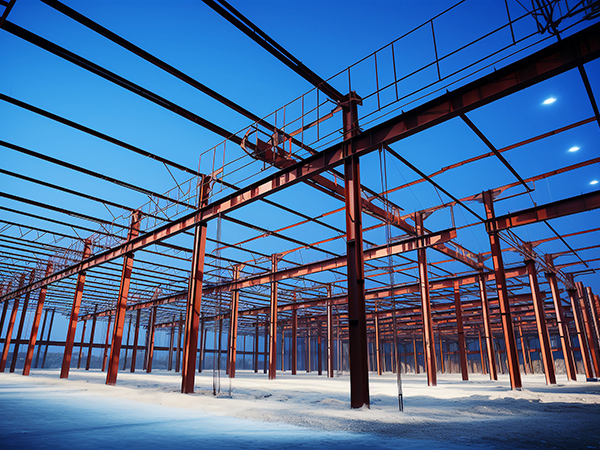
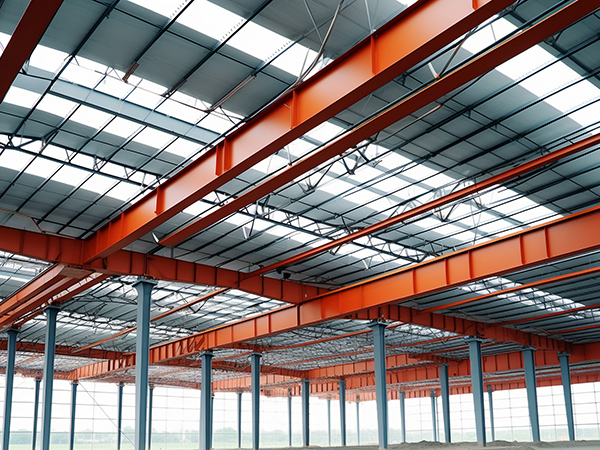
A steel structure shed is a prefabricated or field‑assembled building that uses hot‑rolled steel, H‑beam, I‑beam, channel steel, and steel plates as the main load‑bearing components. It is widely used for:
·Warehouses and logistics centers
·Workshops and manufacturing facilities
·Agricultural storage and barns
·Commercial storage sheds
·Temporary or permanent industrial shelters
The entire system includes a steel frame, roof panels, wall panels, connections, foundations, and optional accessories such as doors, windows, ventilation, and insulation.
Key Features of Steel Structure Sheds
1. High Strength & Long Durability
Steel provides excellent tensile and compressive strength, making steel structure sheds stable under wind, snow, earthquake, and heavy loads. With proper anti‑corrosion treatment, a steel shed can serve for 30–50 years with minimal maintenance.
2. Fast Construction & Short Cycle
Most steel components are prefabricated in a factory and only require on‑site bolted or welded assembly. This greatly reduces construction time compared with reinforced concrete buildings, helping you start operation earlier.
3. Cost‑Effective & Economical
Steel structure sheds are lighter, requiring smaller foundations and less on‑site labor. They also generate less waste, lower overall project costs, and offer better return on investment.
4. Flexible Design & Large Span
Steel structures easily achieve large clear spans without interior columns, maximizing usable space for machinery, storage racks, and logistics movement. Customizable in length, width, height, and openings.
5. Environmentally Friendly & Recyclable
Steel is 90% recyclable. At the end of its service life, the material can be recycled rather than becoming construction waste, supporting green building standards.
6. Easy Maintenance & Expandable
Steel sheds allow future expansion, relocation, or modification. Routine maintenance mainly involves checking coatings, bolts, and sealing, which is simple and low‑cost.
Standard Specifications for Steel Structure Shed Construction
To ensure safety, stability, and compliance, professional steel structure shed projects follow these core specifications:
1. Design Loads
·Wind load: Typically 0.3–0.8 kN/m², adjusted based on regional climate standards.
·Snow load: 0.3–1.0 kN/m², determined by local snowfall conditions.
·Live load: For roofs and floors according to intended usage.
2. Main Steel Frame
·Main columns: H‑section steel, box steel, or round steel pipe.
·Main beams: H‑beam, truss beams, or welded steel beams.
·Steel grade: Commonly Q235B or Q355B (equivalent to international grades).
3. Purlins & Secondary Structure
·Usually C‑section or Z‑section steel purlins.
·Connect roof and wall panels to the main frame.
4. Roof & Wall Cladding
·Common materials: corrugated steel sheets, EPS sandwich panels, rock wool panels, polyurethane panels.
·Thickness: 0.4–0.8 mm for single skin sheets; 50–200 mm for insulated panels.
·Provides waterproofing, heat insulation, sound insulation, and fire resistance.
5. Connection Methods
·High‑strength bolt connections (most widely used for safety and convenience).
·Welding for factory prefabrication and partial on‑site reinforcement.
6. Anti‑Corrosion Treatment
·Sandblasting or shot blasting to remove rust.
·Primer + topcoat painting, or hot‑dip galvanizing for long‑term rust protection.
7. Foundation Requirements
·Independent concrete foundations or strip foundations.
·Anchor bolts connect the steel column base to the concrete foundation.
·Designed based on soil conditions and total structural load.
Best Practices for Steel Structure Shed Construction
1. Start With Professional Design & Calculation
Always work with qualified structural engineers to perform structural analysis, load calculation, and construction drawings. Custom design ensures safety and avoids material waste.
2. Choose Reliable Materials & Suppliers
Select certified steel, high‑quality sandwich panels, and genuine high‑strength bolts. A reliable steel structure manufacturer ensures component accuracy and surface treatment quality.
3. Strict Factory Prefabrication Control
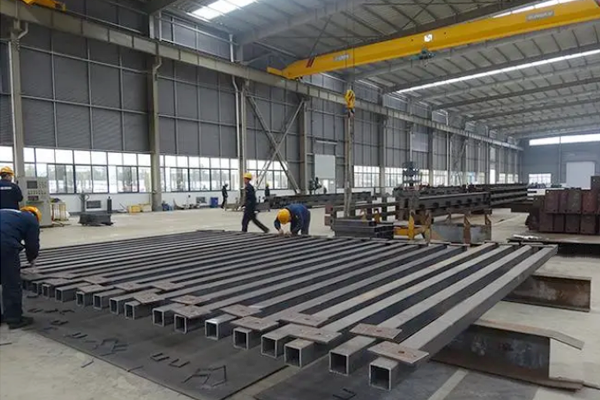
Components must be precisely cut, welded, drilled, and coated in the factory. Strict quality control reduces on‑site modification and delays.
4. Professional On‑Site Installation
Follow approved construction sequences: foundation acceptance → column installation → beam installation → purlin installation → roof & wall panels → doors & windows.
·Use professional installation teams and equipment.
·Ensure accurate alignment and proper bolt torque.
5. Waterproofing & Sealing
Pay close attention to roof ridges, overlaps, edges, openings, and flashing details. Proper sealing prevents water leakage and extends building life.
6. Regular Inspection & Maintenance
·Check bolt tightness, coating condition, and panel damage regularly.
·Clean gutters and drainage systems to avoid water accumulation.
·Repair paint damage or rust spots promptly.
7. Comply With Local Building Codes
Obtain necessary permits and follow local regulations for steel structure construction, especially for fire safety, electrical systems, and safety standards.
Conclusion
Steel structure shed construction combines efficiency, durability, economy, and environmental protection, making it ideal for modern industrial and storage buildings. By understanding key features, following standard specifications, and implementing professional best practices, you can achieve a safe, stable, and long‑lasting steel structure shed that meets your operational needs. Whether you are building a small storage shed or a large‑span industrial warehouse, partnering with an experienced steel structure supplier ensures high‑quality design, manufacturing, and installation for your project.
References
GB/T 7714:Approaches for design of lightweight steel structures, current controlling conditions, and the issues recommended to be emphasized in a prospective lightweight steel building code. Pamukkale University Journal of Engineering Sciences
MLA:Lightweight Steel Framed Construction System. Proceedings of the European Convention for Constructional Steelwork (ECCS)
APA: Towards a consistent design approach for steel joints under generalized loading. Journal of Constructional Steel Research
-
Fast Assembled Multi-Story Steel Structure Workshop Factory For Industrial Use
-
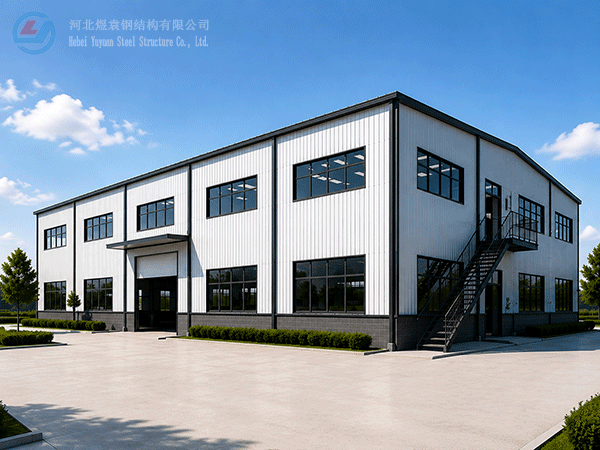
Modern Two-Storey Prefabricated Steel Structure Workshop Building Industrial Shed Construction
-
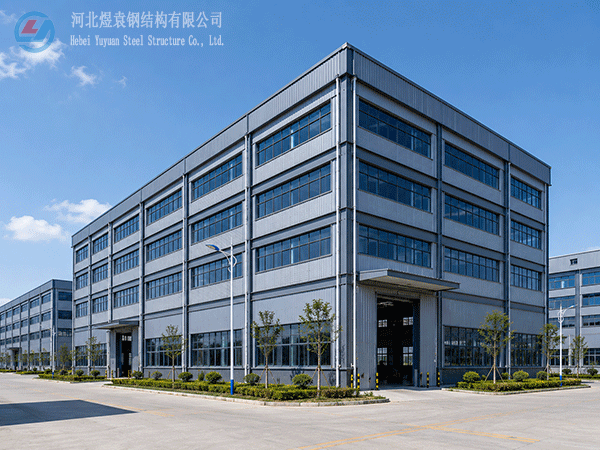
Yuyuan export Steel Structure Warehouse Prefab Steel Structure Warehouse for storage
-
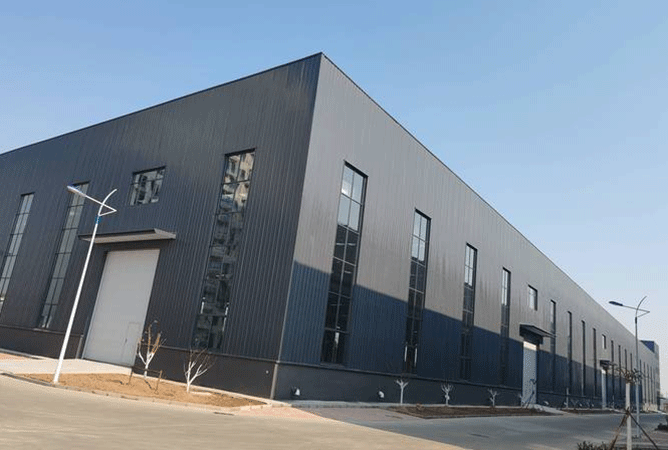
Export steel structure workshops Prefabricated steel structure workshops Light steel structure war
-
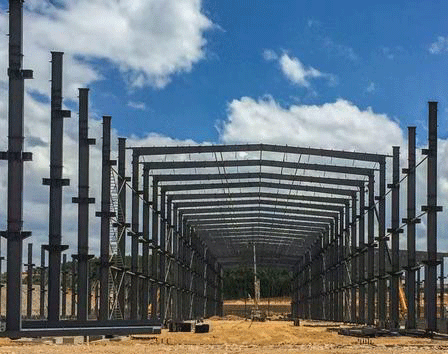
High Quality Low Cost Prefabricated Steel Structure Industrial Warehouse Shed
-
Xiao Sheng - Maldives
-
Xiao Sheng - Maldives
-
Xiao Sheng - Maldives
Hebei Yuyuan Steel Structure Co., Ltd.
Copyright © 2024-2025 https://www.yysteelwarehouse.com. All Rights Reserved Hebei Yuyuan Steel Structure Co., Ltd. All Rights Reserved.